Standard, miniature or toy: choosing the right poodle for your life
One breed, three sizes, and a great deal of confusion. Here is the honest comparison — including where each size struggles.
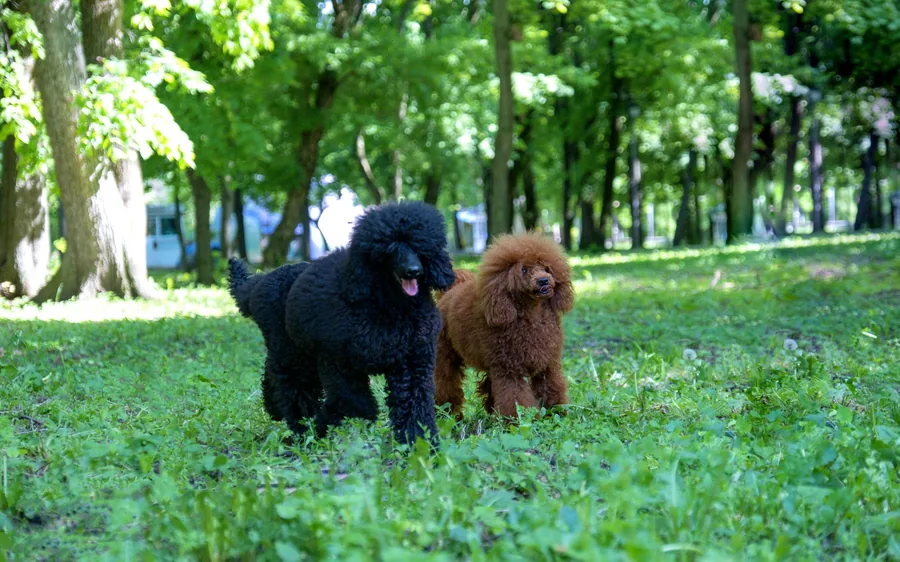
People often assume the standard, miniature and toy poodle are three different breeds. They are not. They are one breed in three sizes, judged against the same standard, with the same coat, the same intelligence and much the same opinion of themselves. What differs is scale — and scale changes almost everything about how a dog fits into a household.
The three sizes at a glance
| Standard | Miniature | Toy | |
|---|---|---|---|
| Height at withers | Over 38 cm | 28–35 cm | Under 28 cm |
| Typical weight | 20–30 kg | 6–8 kg | 3–4 kg |
| Exercise appetite | High — a genuine athlete | Moderate to high, but satisfiable | Modest |
| Suits apartments | Rarely | Comfortably | Very well |
| Robust with children | Yes | Generally yes | Needs care |
| Fits under a café table | Not really | Neatly | Easily |
| Grooming | 6–8 weekly, and a lot of coat | 6–8 weekly | 6–8 weekly |
The standard poodle
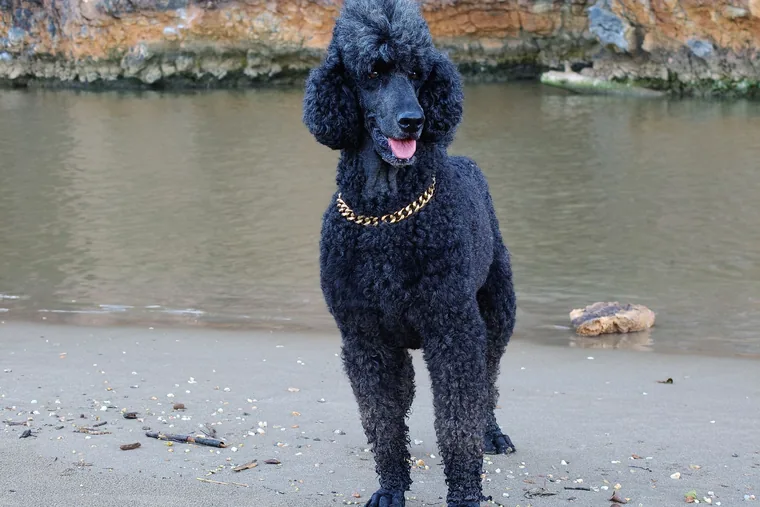
The original. A working water retriever with the build to prove it: tall, deep-chested, powerful and, in the right hands, one of the most capable dogs you will ever own. Standards excel at anything you can train — obedience, agility, scent work, assistance work.
The catch is honest exercise. A standard poodle that gets a twenty-minute walk and a cuddle is a frustrated dog, and a frustrated standard is inventive. They also take up a great deal of house, cost considerably more to groom, and have a shorter average lifespan than the smaller sizes.
The toy poodle
Charming, portable, and often long-lived. A well-bred toy is not a fragile ornament — but it is a small-boned dog, and small bones break. Households with very young children, or with the sort of cheerful chaos that involves people walking backwards, need to think carefully.
Toys also concentrate whatever the breeder got wrong. In a size where a few hundred grams matters, careless breeding shows up quickly as luxating patellas, dental crowding and collapsing tracheas. This is the size where choosing a registered, testing breeder matters most.
The miniature poodle
The miniature is the size we breed, so read this knowing where we stand — but the reasoning is straightforward enough that you can check it against any breeder you speak to.
At roughly 28–35 cm and 6–8 kg, the miniature is the size that stops being a compromise. It is substantial enough to be a real dog: to walk a headland, swim at the beach, keep up with a bike on the flat and be handled by a child without either party being anxious. It is also small enough to lift into a car, to fold under a café table, to live in an apartment, and to travel without a freight negotiation.
Miniatures tend to be the longest-lived of the three, commonly reaching fourteen to sixteen years with good care. They keep the standard’s working brain, which is a gift if you intend to train and a liability if you intend to leave them in a laundry.
If you want one dog that will manage the beach on Saturday and the café on Sunday without either being an event, the miniature is very hard to argue with.
So which one?
- Choose a standard if you have space, an active daily routine you will genuinely keep, and a grooming budget to match.
- Choose a toy if you want a small companion, your household is calm, and you are prepared to be fussy about the breeder.
- Choose a miniature if you want a dog that comes with you — walks, coast, cafés, car, holidays — and you would rather not organise your life around either extreme.
What matters more than size
Whichever size you land on, the same three questions separate a good purchase from a fifteen-year regret. Are both parents health tested, with certificates you can actually see? Is the breeder registered with the ANKC or its state body, breeding under a prefix? And are the puppies raised inside a household, or in a shed?
A well-bred miniature from a careful program will out-live and out-behave a poorly bred standard every time. Start with the breeder. The size is the easy part.